
Resources
Practical things you can use today — for parents, for teachers and for young people.
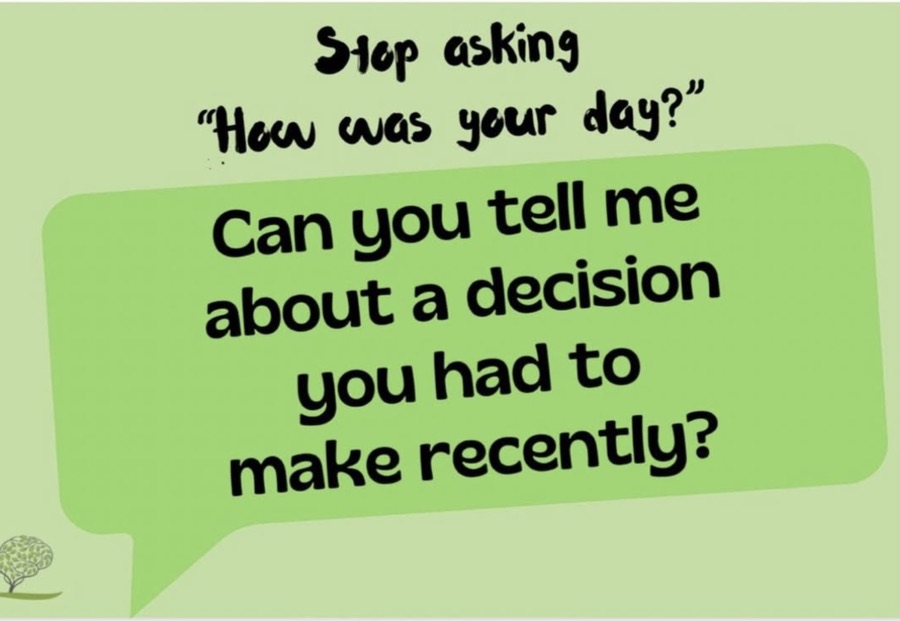
Stop asking “How was your day?”
“Fine.” “Nothing.” “Can’t remember.” The question is too big and too vague, and it asks a tired child to summarise seven hours on the spot. Specific questions get real answers. Here are some to try instead — at pick-up, at supper, or in the car where nobody has to make eye contact. I add new ones regularly.
Have any of your classmates ever asked a question that your teacher couldn’t answer?
What was the best thing that happened today, and why was it special?
What was the hardest part of your day, and how did you handle it?
What was the funniest thing that happened today?
Who did something today that surprised or impressed you — and what did they do?
When was it hard to follow the rules today?
What games were happening at break, and were you in them?
What is one thing at school that you are thankful for?
Which teacher has the most patience?
What is one thing about your school that is unique?
If you could rewind one moment from today and watch it again, which one would you pick?
What is something you are really good at that makes you feel proud?
Do your emotions ever have an impact on how you behave?
Do you ever wait until the last minute to finish something?
Can you tell me about a decision you had to make recently?
How would you solve this problem if you were the boss or the teacher?
What do you think is the best thing about being your age?
What is the weirdest word you have learned?
How much maths do you think is used on a daily basis?
What period of history would you travel to if you could?
What is the best thing that could happen on a random school day?
Do you think everything will turn out ok this year?
What’s one thing you want me to always remember about you?
A new question every week
I post a fresh Stop Asking card on Instagram each week. Follow along and never run out of things to ask at the supper table.
Open questions with a specific hook give a child something concrete to retrieve. For children with Executive Function or working-memory difficulties, that difference matters enormously — the problem often isn’t that they don’t want to talk, it’s that “how was your day” requires them to organise and summarise on demand, which is exactly the skill they find hardest.

I am listed in the wellness directory at The Garden, a Kenyan directory of vetted wellness and health practitioners.
The stories we overlook: dyslexic storytelling is powerful, but calls for a broader narrative — an article on eKitabu’s Books in Africa that I contributed to.
Coming soon to this page.
I am building this out gradually. If there is something you would find useful, tell me — it is the fastest way for me to know what to write next.
Home & homework
Recommended reading, ADHD and dyslexia resources, homework strategies, Executive Function tools and useful organisations.
In the classroom
Practical classroom strategies, recognising SEND, supporting neurodiverse learners and communicating concerns with parents.
Your own toolkit
Study and revision strategies, organisation systems, managing overwhelm and getting started on things you keep putting off.
Looking for something specific?
Get in touch and tell me what would help. I would rather write the thing you actually need.
Get in touch